Recently, faculty and students from Guangxi university attended the International University Summer Camp themed “AI and Heritage: Bridging the Future” at Nghe An University in Vietnam. Nguyen Ngoc Hieu, Rector of Nghe An University, delivered a speech at the opening ceremony. Over 50 faculty members and students from Vietnam, China, Thailand, the Philippines, Laos, and other countries gathered in Vinh City, Vietnam, to embark on a cross-border cultural and technological journey centered on the theme of artificial intelligence and cultural heritage protection.
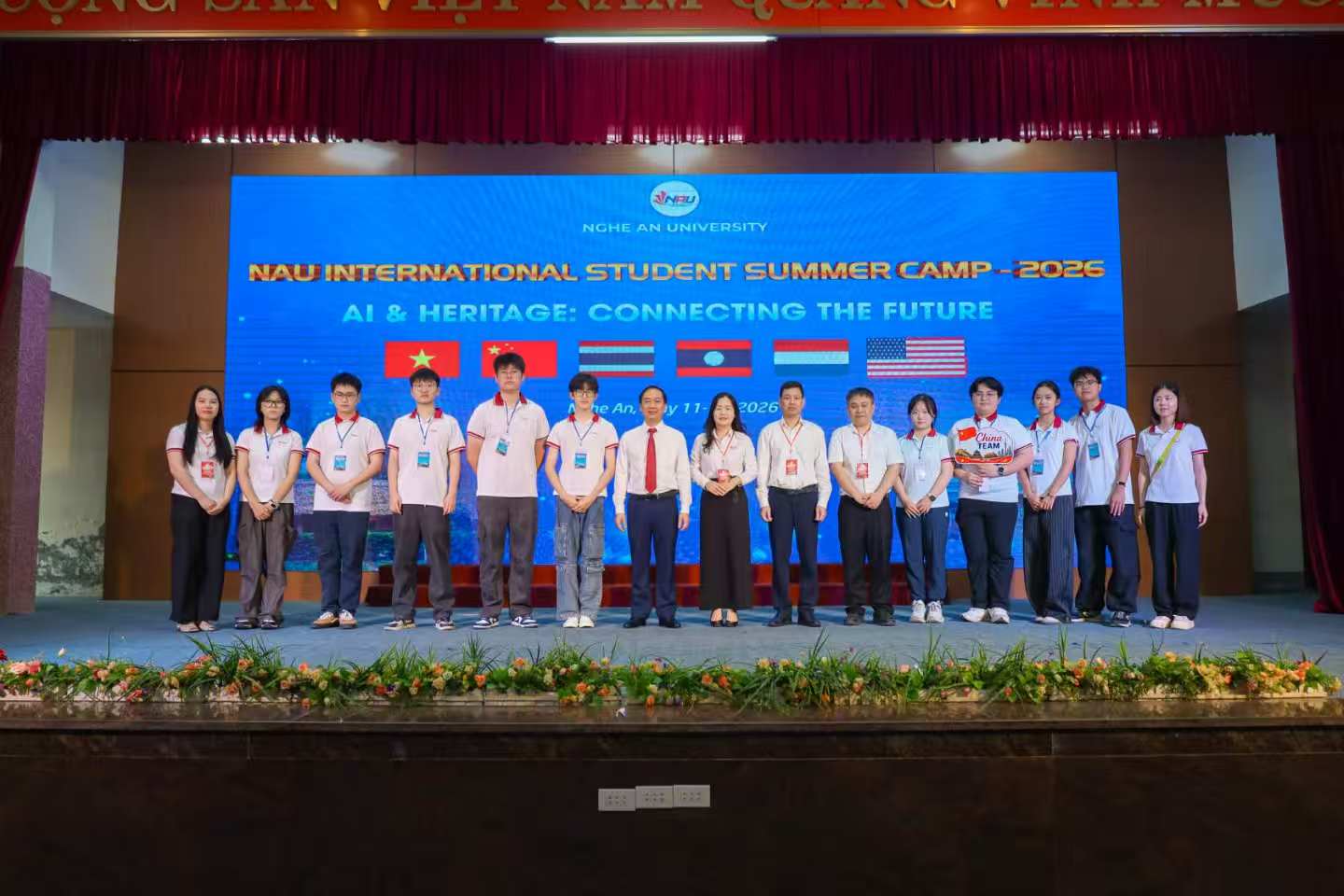
Rector Nguyen Ngoc Hieu stated that Nghe An University regards science and technology, artificial intelligence, and digital transformation as crucial drivers for enhancing the quality of talent cultivation and scientific research. This summer camp serves as a platform for young people from various countries to share knowledge and co-create solutions for heritage protection in the future digital age.
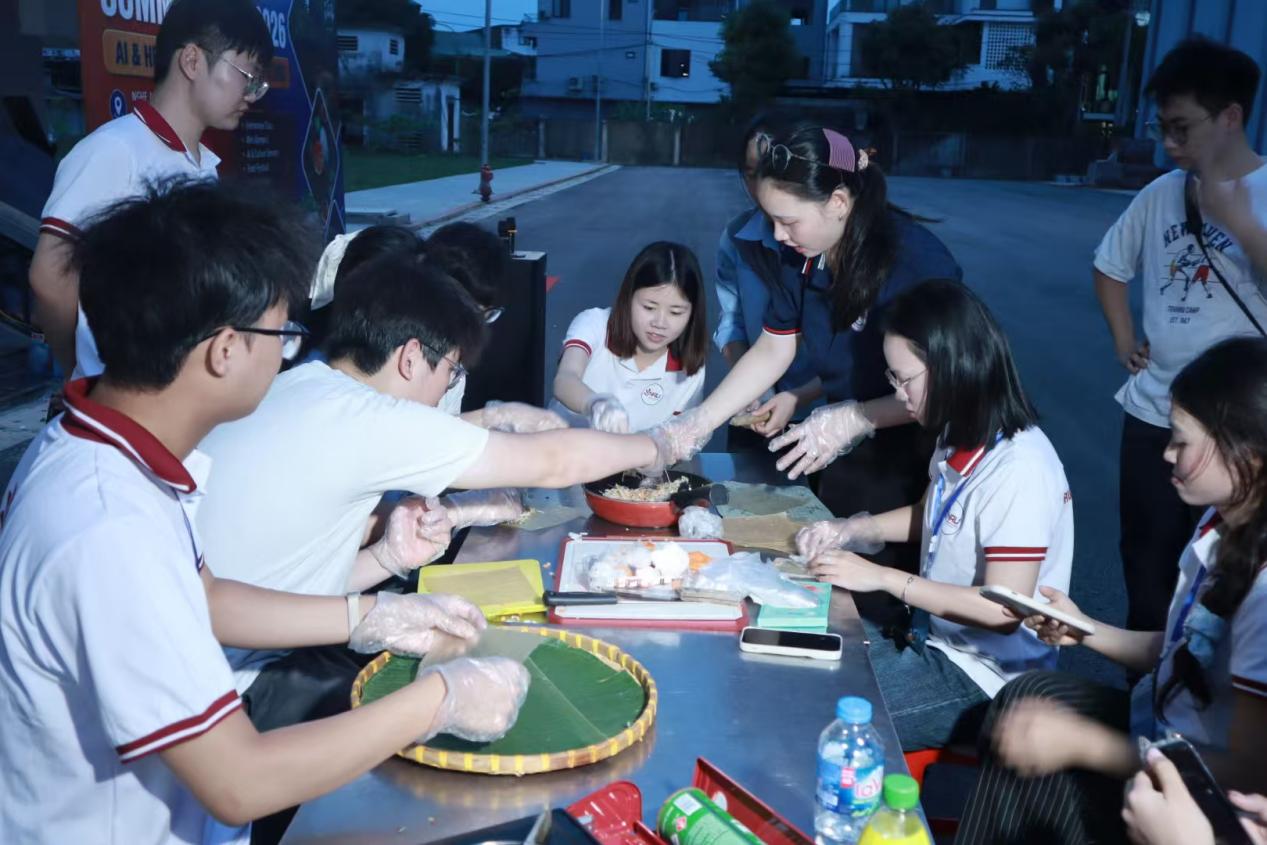
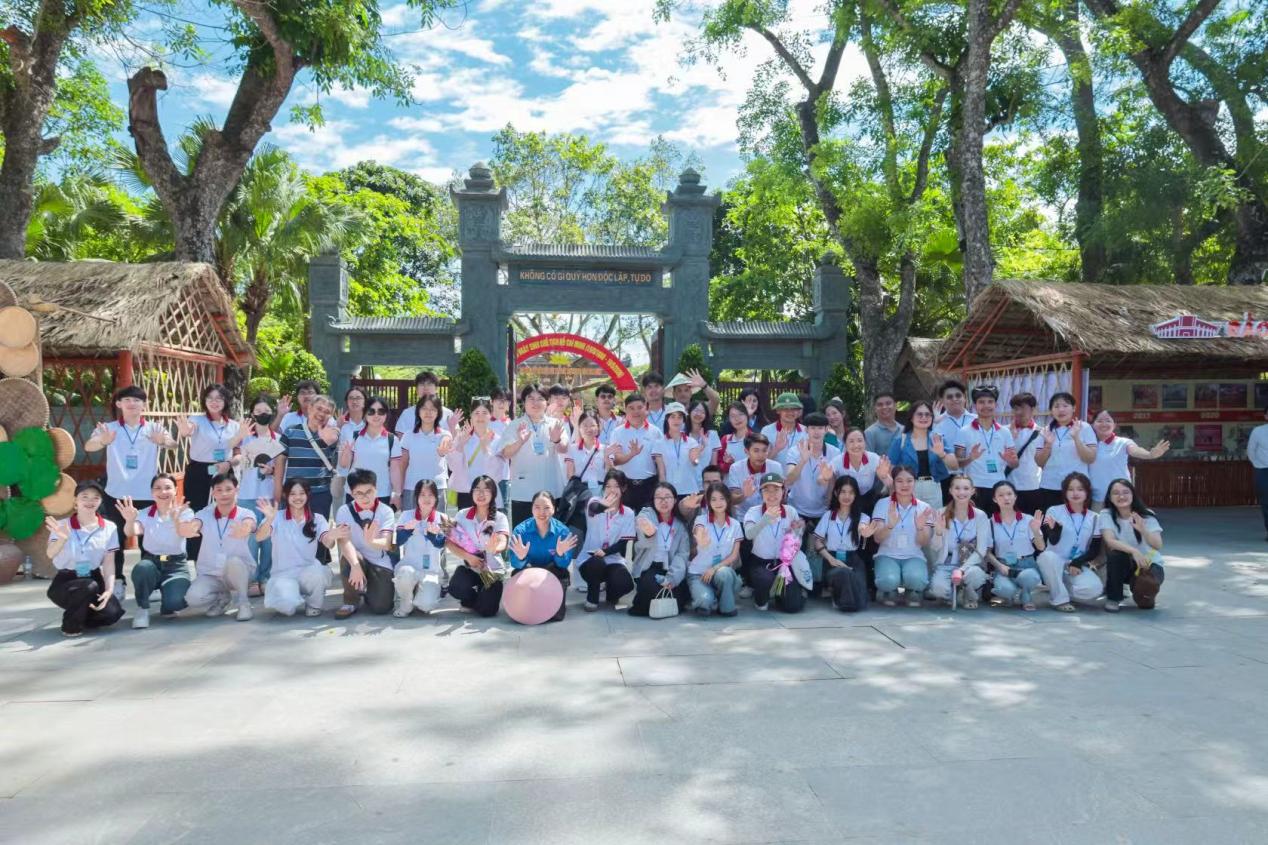
During the summer camp, faculty and students from Guangxi university experienced traditional Vietnamese culture and visited the former residence of President Ho Chi Minh, tracing the historical roots of the China-Vietnam friendship. At the “AI and Cultural Heritage” seminar, GXU’s faculty and students presented the Guangxi Nanning Yucai School site as a hypothetical case and proposed concepts for its protection and inheritance using artificial intelligence technology, demonstrating the professional thinking and humanistic commitment of our young students.
In recent years, Nghe An University has engaged in frequent exchanges with Guangxi university. In June 2025, the two universities signed a Memorandum of Understanding, establishing a long-term cooperation mechanism. In December of the same year, Nghe An University selected 10 students to participate in the 2025 International Student AI Research Camp held by Guangxi university. The participation of GXU’s faculty and students in this summer camp at Nghe An University has effectively promoted mutual visits and academic exchanges between the two universities. It also serves as a vivid practice for both institutions to jointly carry on and pass down the "Yucai Bond."

 Home
>
News & Events
>
News
Home
>
News & Events
>
News


